Blog

Dunne and Raby

Anthony Dunne and Fiona Raby are noted for their work in speculative design. They are quoted as stating:

Dunne & Raby use design as a medium to stimulate discussion and debate amongst designers, industry and the public about the social, cultural and ethical implications of existing and emerging technologies. (Dunne & Raby, 2016)

I can’t possibly cover all of the work that this prolific partnership has generated, but one particular project has captured my attention and helps to explain their approach to using design as a means of communicating speculative future thinking.

dc1
Digiland, United Micro Kingdoms, Dunne & Raby.

The United Micro Kingdoms project was commissioned by the Design Museum and uses speculative design to communicate four alternative imagined futures for the UK. It envisages a future where the UK is split into four separate autonomous states that choose very different social and political directions. The concept is well informed by contemporary thinking and published research, but the often abstract concepts can be hard to communicate. The use of ‘good design’ to help make the thinking behind the work accessible is not dissimilar to the methods used in film to help the audience imagine a different reality. Their work is designed to inform, but mostly to spark debate.

Dunne and Raby contend that if we speculate more—about everything—reality will become more malleable. The ideas freed by speculative design increase the odds of achieving desirable futures. (Dunne & Raby, 2013)

I have seen ‘critical design’ and ‘critical artifacts’ used as research tools through the work of Professor Paul Chamberlain of the ADRC at Sheffield Hallam University. I have also used speculative design as a means to communicating ideas at the culmination of some research into how caring can help users extend the life of their possessions in the Critical Care project. I am interested in using a form of speculative design to express ideas about how designers might tackle certain problems. It seems possible that this same work can be used to trigger reactions that can form the basis of further research.
The Agency of Design

The Agency of Design is a London based studio founded by  multidisciplinary group of designers who state:

Having witnessed the unhappy ending of products, the studio was founded around the concept of human agency, we wanted to demonstrate that the agency of design was about the potential of design to create change in the world. It is from this ethos that we focus on design that creates a more desirable future.  (The Agency of Design 2016)

Their work ranges from commercially realist product design, digital/virtual solutions, guides and instructions through to provocative projects that stimulate debate.

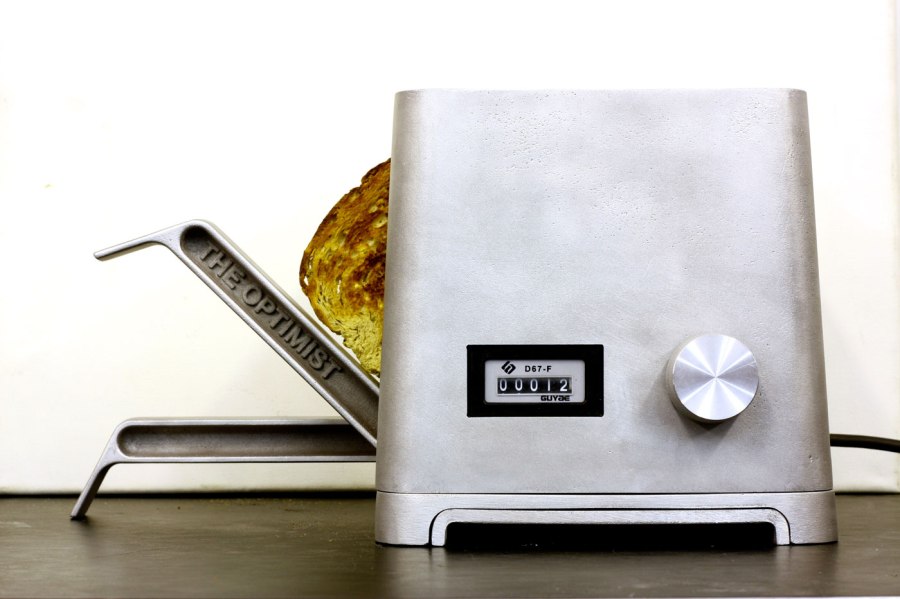
the optomist - The Agency of Design
The Optimist Toaster – The Agency of Design


The example shown above is from a range of three toasters designed to illustrate potential future directions that designers could take simple domestic products to promote more sustainable consumption.

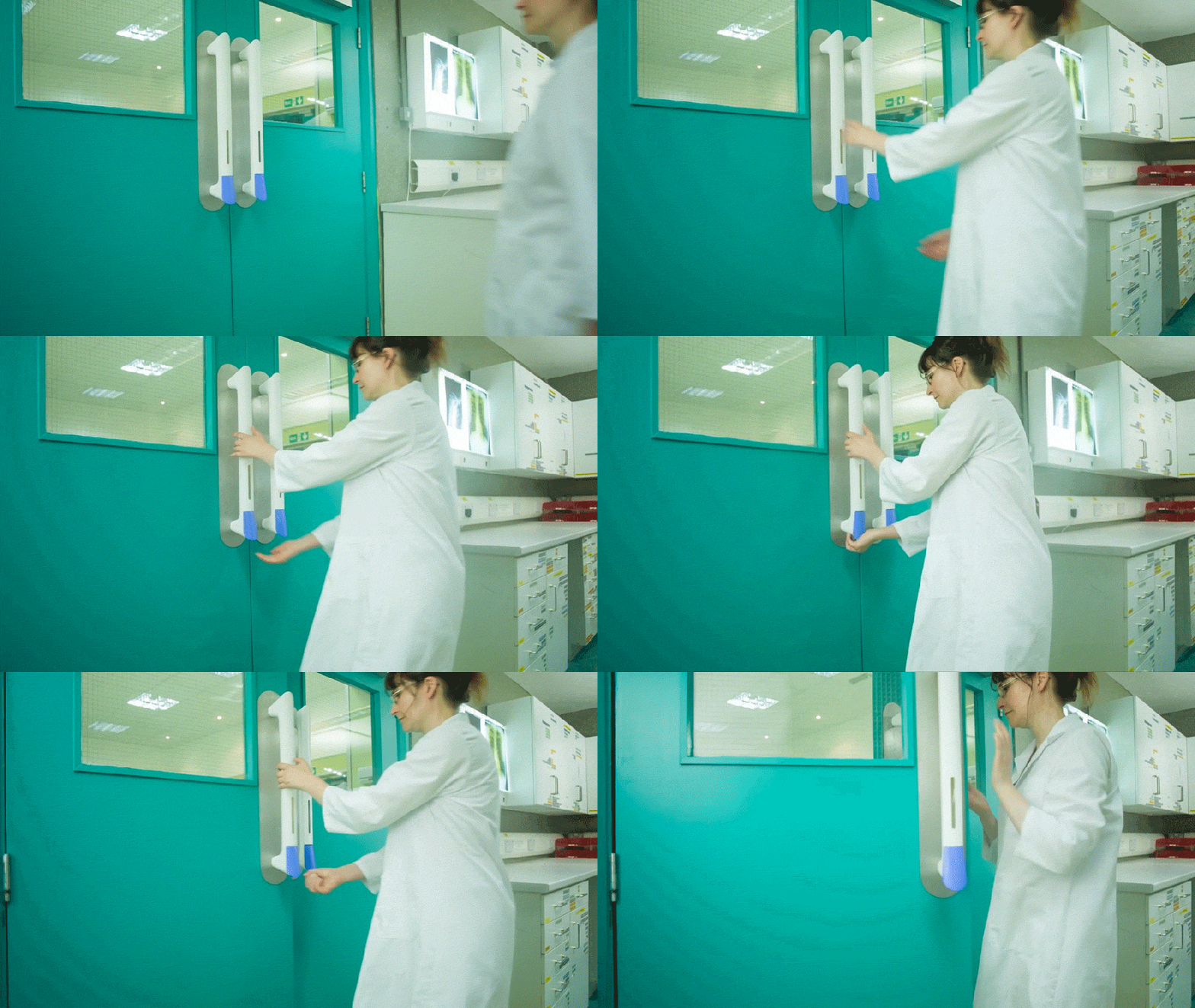
There are many other examples on their website of products aiming to create a better future. This includes more sustainable design, as seen with the ‘Design Out Waste‘ project, solutions to infection control in hospitals with the ‘PullClean Door Handle‘ and the ‘Digesting Science‘ project which culminated in a website used to explain Multiple Sclerosis to children whose parents have the condition.

doorInteraction
PullClean Door Handle – The Agency of Design

I find their work both exciting and highly accessible, there is a real mix of pragmatic problem solving and speculative ‘critical design’.

Having been enthralled by the work of Dunne and Raby ,but finding their work in speculative design sometimes difficult to rationalise, it is refreshing to find a group whose work appeals to such an extent.

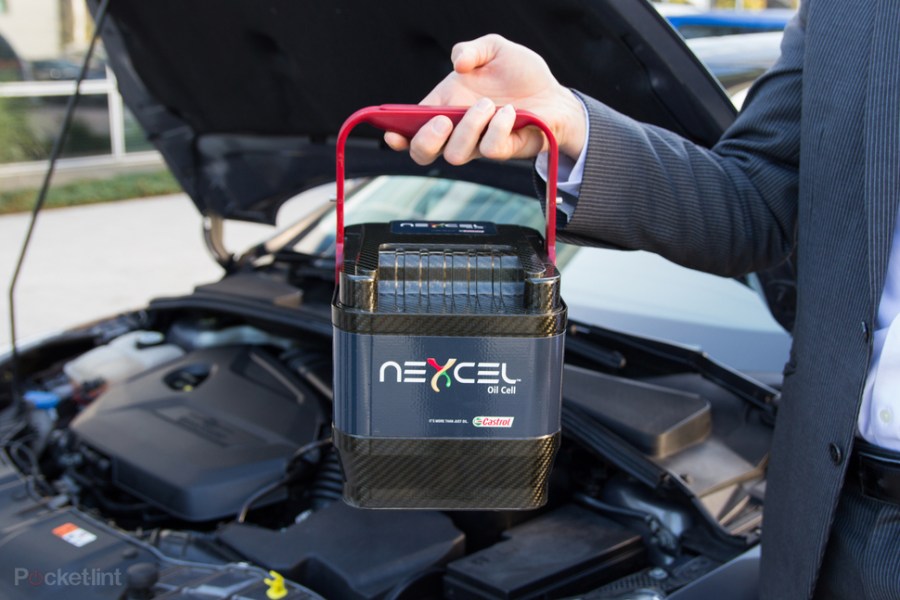
making it clean and simple – Nexcel

Castrol has developed a cartridge system to make changing the oil an filter in a car a simpler task that could be carried out by anyone, without specialist facilities or knowledge. The cartridge, known as Nexcel, contains an oil filter and all of the lubricating oil necessary for the engine of the vehicle to which it is fitted. The owner simply removes the old cartridge and replaces this with a new one which, according to Castrol, takes a total of 90 seconds.

nexcel cartridge

This product has the potential to revolutionise one of the most important service items required to keep an internal combustion engine running efficiently and also to maximise the like of engine. As well as enabling quick and easy servicing, this system has the potential to provide a solution to the issue of collecting used oil for reprocessing.

This approach could be applied to other aspects of product maintenance, designing-in accessible components which could help to manage complex and difficult service tasks, allowing users to take good care of their possessions.

It is important to examine the full impact of any solution that claims to offer significant environmental benefits. Whilst this system would make reprocessing easier and more likely, it may demand a greater level of technical complexity than existing solutions. This has the potential to negate the environmental benefits as more parts demand more resources. However, when considered from an enabling perspective alone, this system is likely to encourage non-expert owners to engage with servicing their own vehicles.

easy access – gogoro

The Gogoro is an electric scooter and infrastructure project initially launched in Taiwan. I was fortunate to visit Taipei in November and came across the showroom for the bikes.

There are many interesting aspects to the vehicle and the service that supports it, but the two most relevant that relate to this project are the technical simplicity and the simple, quick access to servicable parts afforded by the design of the scooter.

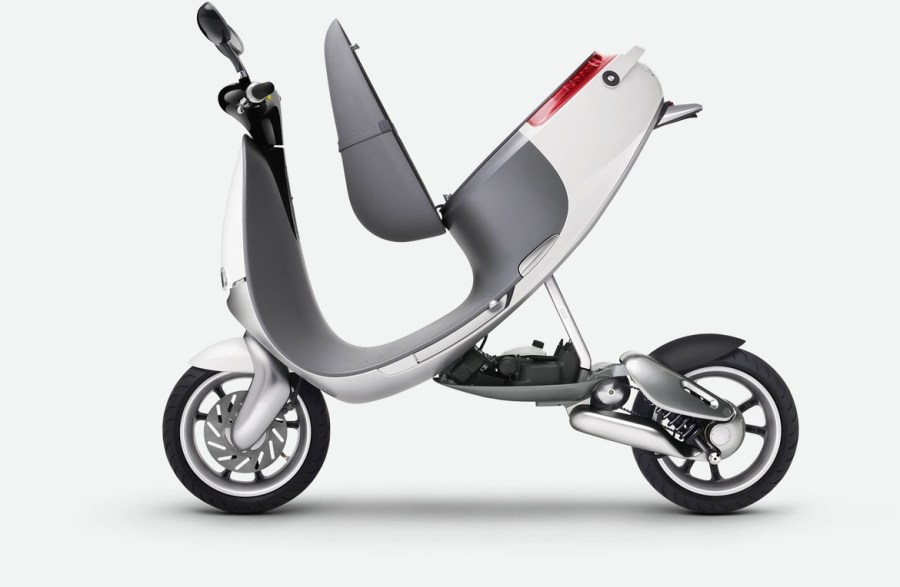
bgd-module-easier-8_0616

The rear of the scooter lifts up to allow quick and easy access to the power-train section. Here, fluids can be topped up, belts tightened and other regular adjustments made with real ease. This aspect is designed in from the outset and adds enables the maintenance that will keep the scooter running reliably and efficiently. Once the rear of the bike is open, and servicable parts are clearly identified.

gogoro rear wheel

The rear wheel nut is another example of a feature that enables quick and simple maintenance. Whilst it does require a specialist tool, it does allow for a simple, reliable and fast attention to the rear tyre and brakes. It is not unusual for ‘specialist tools’ to be restricted to authorised service agents. It has not been possible to ascertain if this tool is supplied with the scooter, but the regular stops needed to exchange batteries would provide and opportunity to make tools available to users.

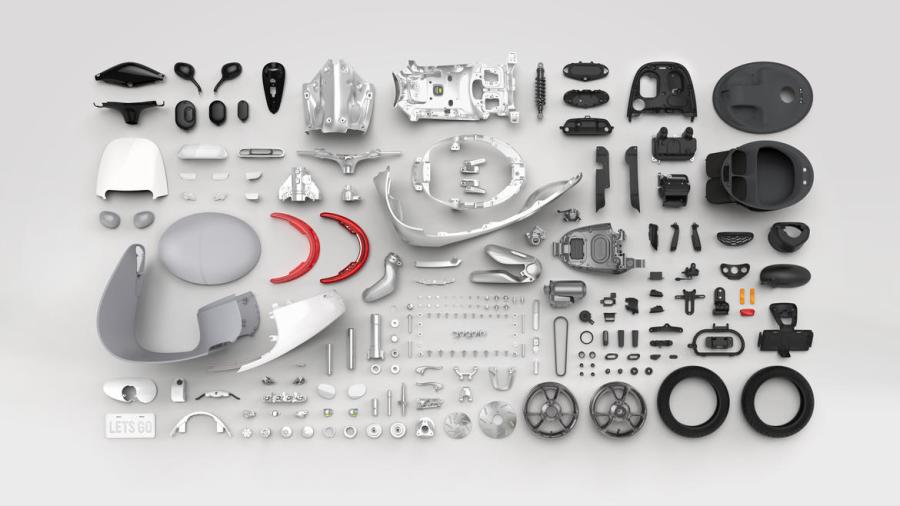
6-all-parts-gogoro-smartscooter-all-parts-on-white Electric propulsion can be significantly simpler than combustion engines as there is often no need for a separate gearbox as electric motors deliver maximum torque from zero revs. The mechanical simplicity contributes to the ease of maintenance as there are less parts to take care of and much less mechanical wear.

The Gogoro represents a product where ease of maintenance has been considered as an integral aspect of the design. This approach is not generally seen even in  much more complex vehicles requiring more comprehensive servicing. As a consequence these more demanding vehicles require expensive and inaccessible equipment to keep them in good working order and to ensure a long life for the product.

Cultural Probes

These are a research tools that offer a less than scientific, but effective means of generating insight and inspirational materials that can help define the direction of a project. This is could provide an interesting start point, but it is difficult to know what to include. Design Research Techniques – Cultural Probes offers a useful description of this technique.

Developed by Bill Gaver, Tony Dunne, and Elena Pacenti in the late 1990s (Gaver, Dunne & Pacenti, 1999), this technique was designed to be deliberately casual as means of gaining a more natural response from those engaged, that could facilitate research.

The final research event from a group research project that I was involved in, the caring project, identified a number of people who actively ‘cared’ for one or more of their belongings. As an initial step in this project I am going to ask a number of these people to use a Cultural Probe Set with the aim of identifying interesting avenues to explore further down the line.

The kits generally consist of a number of means of recording information and typically contain some form of diary, a camera for recording images and other ways to prompt a response. They are often employed when the activity that needs to be observed  takes place in remote locations, over a long period of time or where there is a requirement for minimal influence on the activity to be recorded. (http://infodesign.com.au/usabilityresources/culturalprobes/)


Taking Good Care of Things

To have an open brief is difficult and finding a decent jumping off point for, what feels like, a very important piece of work is tricky.

My interests lie in human behaviour, design & emotion, speculative design and product design. Finding a project that can act as a vehicle for all of this should be possible, but will take careful consideration.

Research Funding

I have secured some funding from  the Art & Design Research Centre at Sheffield Hallam University to support the following project:

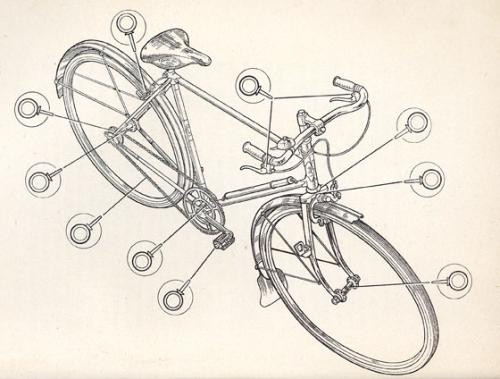
bicycle lubrication
Bicycle Lubrication Chart

From initial research it is clear that many products exist that allow users to engage in active care and maintenance as a means of extending the product lifespan. Most examples are of established products with recognised rituals and procedures and are often practiced by niche groups of enthusiasts.

There are many examples of products past and present that require some form of active care to maintain effective or optimum performance. This has become eroded as society moved towards the promise of convenience during the 20th Century and it could be argued that care practices are disappearing as a consequence. In the context of sustainably responsible design, extending product life can be an important factor in reducing the environmental impact of consumerism.

Building on the research undertaken in the Caring Project, this work will examine the practices of users who engage in the active maintenance of their possessions: the rituals they employ, the tools that they use and the social networks that exist to support such practice.

Responding with critical design, the aim is to discover ways that designers can encourage users to engage in preventative maintenance and therefor extended the life of their possessions.

My intention is to use the MA Design – Project 2 to support this research project and I will document and publish the work as a blog.